Historic Interiors • Austrian Alps • Monastic Architecture

Templar’s Hide

Hidden within the former infirmary wing of Neuberg Abbey in Austria, this atmospheric Gothic apartment remains suspended somewhere between monastery, alpine refuge and intellectual retreat. Rather than modernizing the centuries-old structure beyond recognition, the renovation embraces the silence of the original architecture — preserving vaulted ceilings, pale limewashed walls and monastic proportions while introducing a restrained language of warmth, tactility and contemplative living.

The room where winter gathers

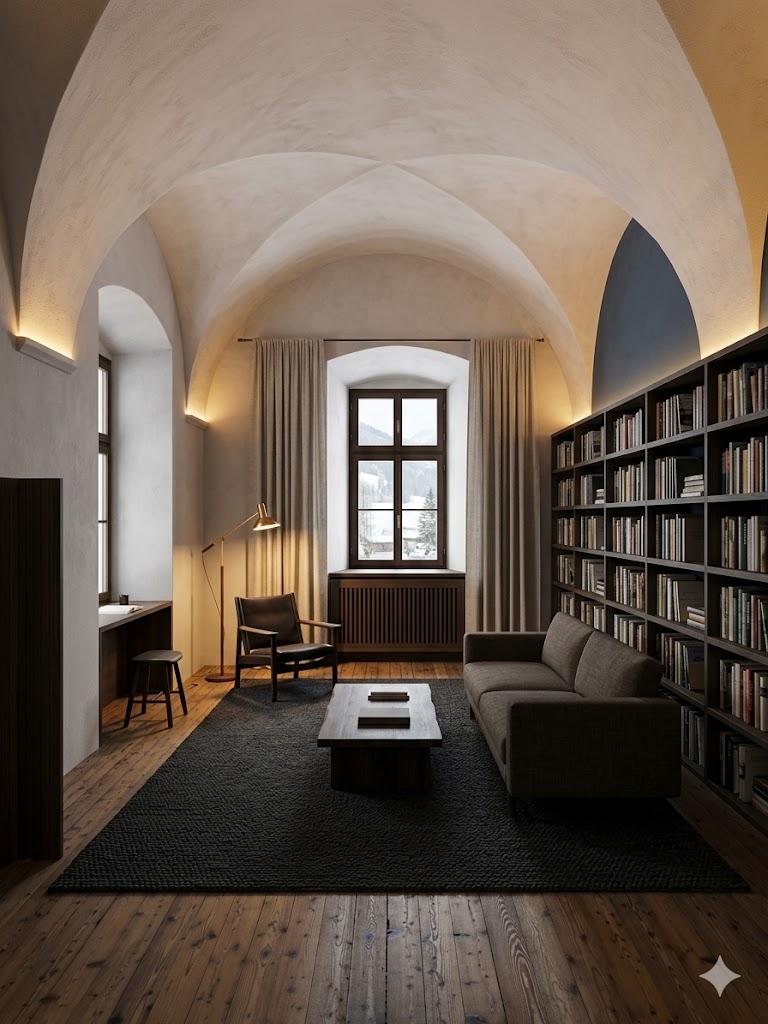
The primary salon anchors the apartment with a sense of almost ecclesiastical calm. Rather than filling the vast proportions with excessive furniture, the design relies on carefully weighted pieces in dark oak, deep textiles and soft indirect light. The vaulted ceilings remain entirely untouched — their Gothic geometry becoming the emotional centerpiece of the room.

What makes the space compelling is not luxury in the conventional sense, but proportion and silence. The pale walls reflect winter daylight throughout the day while concealed warm lighting softens the edges of the architecture during long alpine evenings. Thick woven rugs and tactile upholstery create psychological warmth without visual heaviness.

The effect is closer to an intellectual monastery than a modern apartment: contemplative, grounded and profoundly still.
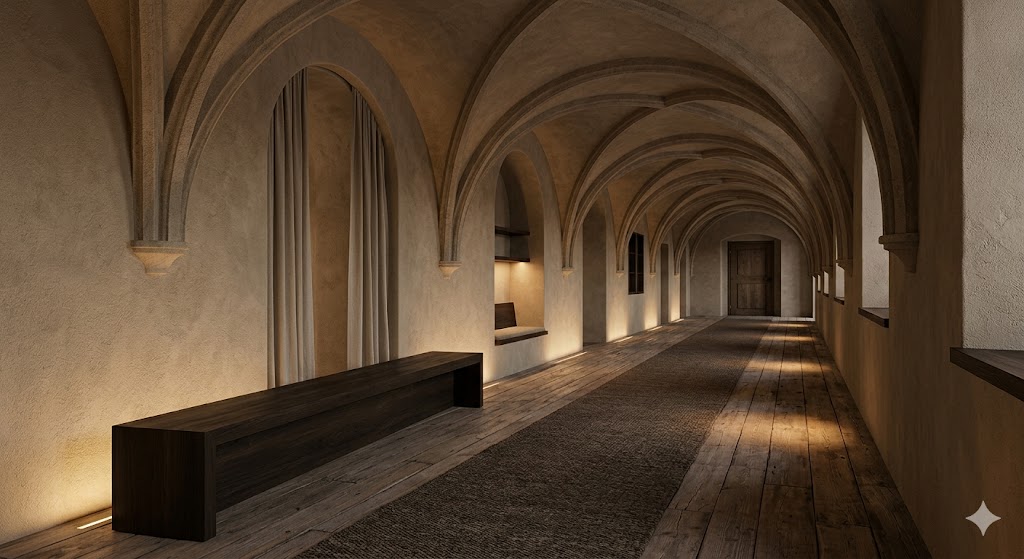
The vaulted salon preserves the original Gothic geometry of the abbey infirmary while introducing a restrained material palette of lime plaster, oak and warm textiles.
“According to local legend, Abbot Otto once attempted to finance alchemical experiments within the monastery walls — draining the abbey treasury so completely that entire sections of Neuberg remained architecturally frozen for centuries.” Local Neuberg folklore
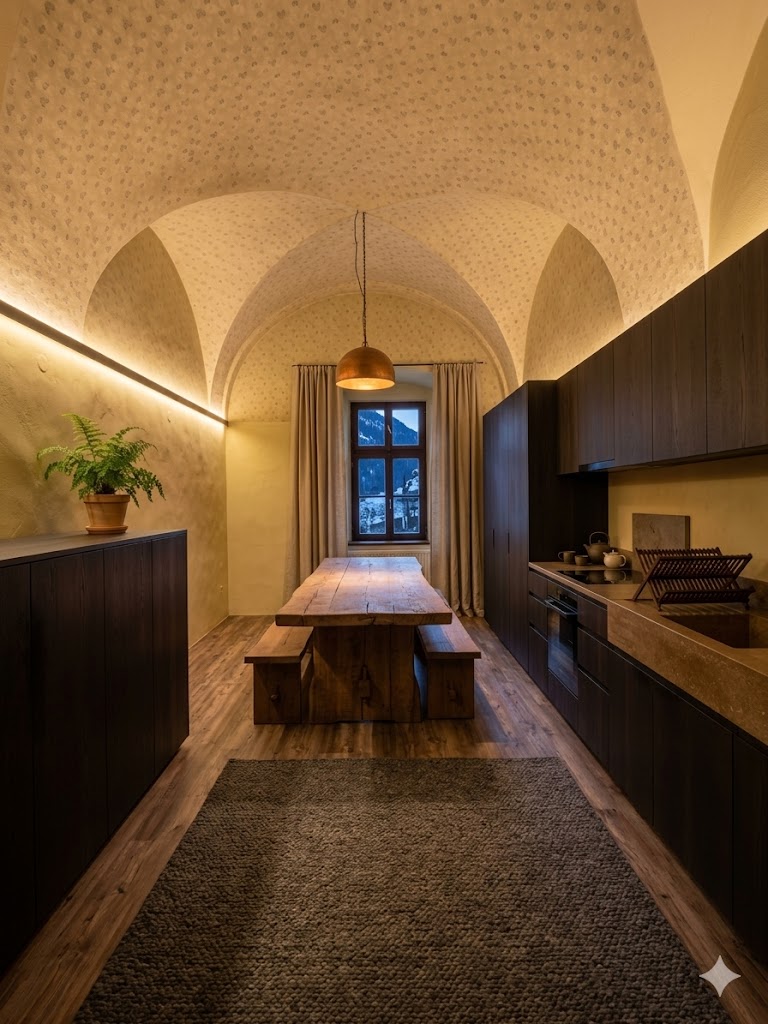
The kitchen was conceived less as a contemporary culinary space and more as a communal winter room where warmth, tea and long conversations dominate daily ritual.

A kitchen shaped by restraint

Rather than replacing the existing structure entirely, the kitchen embraces the philosophy of minimal intervention. Dark timber cabinetry introduces visual weight against the pale vaulted shell while a communal table reinforces the monastic rhythm of gathering, reading and slow meals.

Warm indirect lighting traces the geometry of the ceiling without turning the space theatrical. Open shelves preserve an atmosphere of lived practicality while muted stone surfaces avoid the sterile perfection common to contemporary minimalist interiors.

The resulting room feels deeply human — closer to an old alpine rectory than a polished architectural statement.

The monastic bedroom

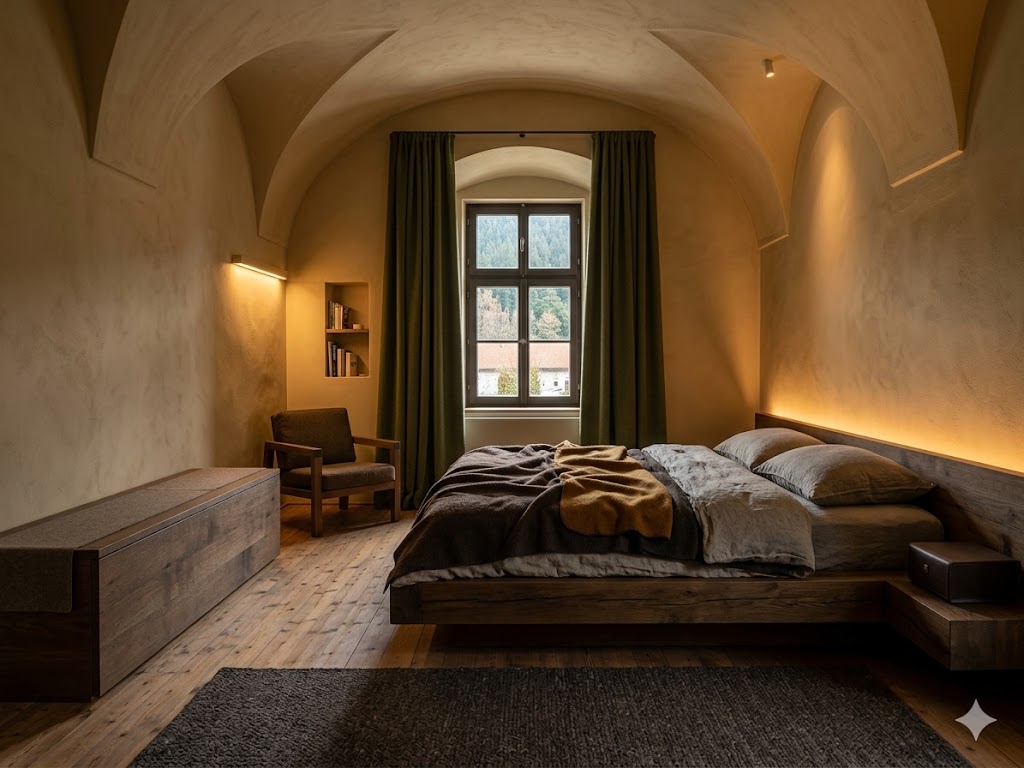
The bedroom remains intentionally sparse, allowing the extraordinary proportions of the vaulted ceiling to define the emotional character of the room. Low timber furniture reinforces horizontal calm beneath the verticality of the Gothic shell.

Heavy linen curtains soften both sound and winter cold while warm concealed lighting transforms the pale plaster walls into reflective surfaces of amber light after dusk. The design avoids both hotel luxury and ascetic severity — landing somewhere between alpine retreat and contemplative study.

Even the material palette feels intentionally subdued: raw oak, untreated textiles, brushed metals and softened plaster surfaces designed to age rather than impress.

Warm indirect light and restrained natural materials create a psychologically protective atmosphere during long alpine winters.
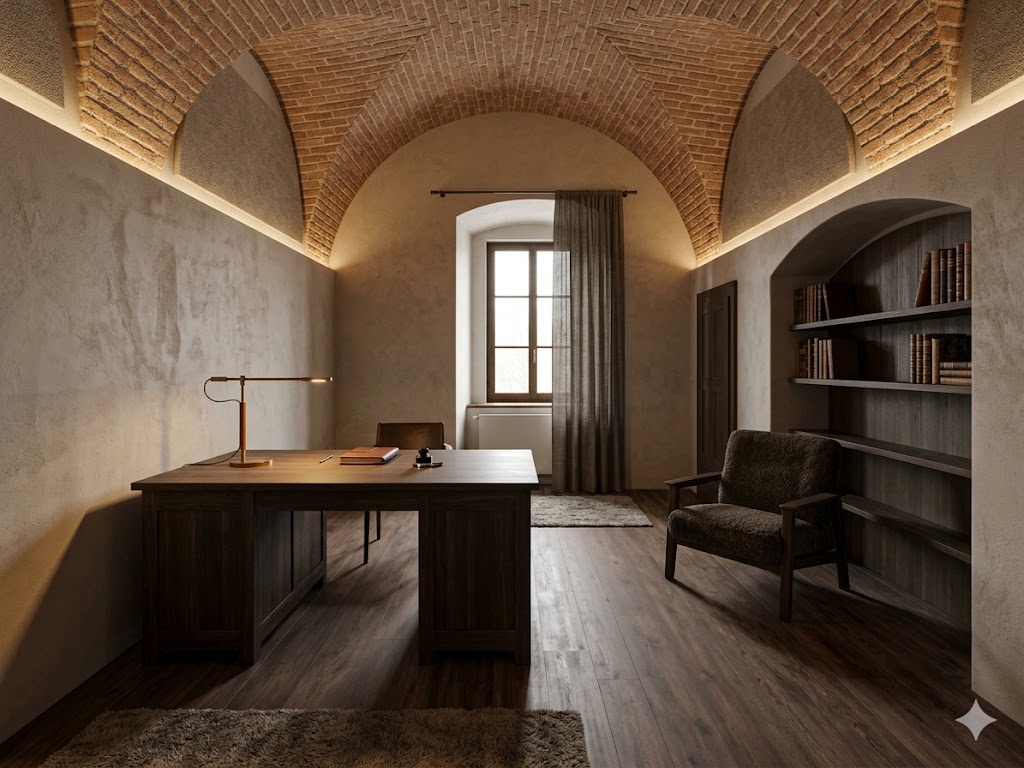
The study introduces floor-to-ceiling shelving and restrained reading light while preserving the original monastic proportions of the infirmary wing.

An intellectual refuge

The study may be the apartment’s most atmospheric space. Beneath the pale ribbed vaults, a library wall and restrained furnishings create the feeling of a secluded alpine archive — somewhere between monastery, observatory and private reading room.

Unlike contemporary workspace culture, this room privileges slowness over productivity. Thick curtains, warm pools of light and deep natural textures transform the act of reading into an almost ritual experience during the long Austrian winters.

The architecture itself performs much of the emotional work. The height of the ceilings, the depth of the window reveals and the softened acoustics of plaster and timber create a room designed less for efficiency than contemplation.

The thermal refuge

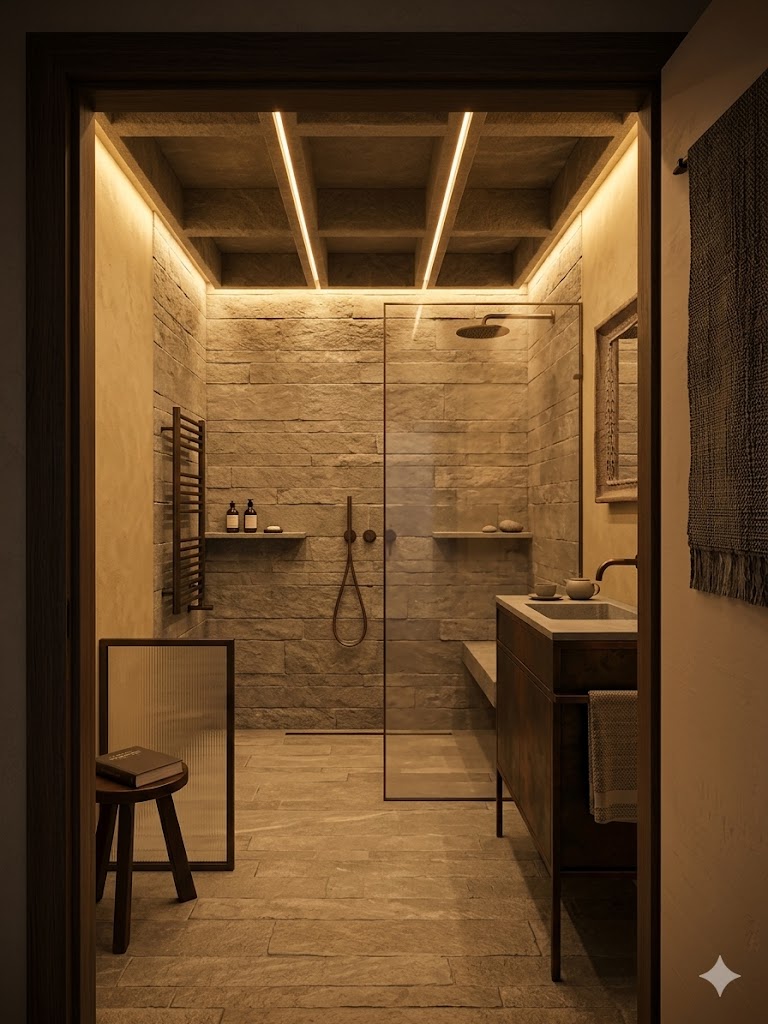
The bathroom departs slightly from the untouched monastic shell of the remaining apartment. Because the original space suffered from severe thermal inefficiency, the ceiling was lowered historically — creating a more intimate atmosphere suited to warmth and recovery.

Natural stone textures, matte fixtures and concealed lighting avoid the language of luxury spa culture. Instead, the room feels grounded, tactile and deeply protective — closer to a private thermal chamber than a designer bathroom.

The walk-in shower remains intentionally restrained, emphasizing silence and materiality rather than spectacle. Warm surfaces, indirect light and muted acoustics transform the space into a place of physical retreat during cold alpine months.

Natural stone surfaces and restrained lighting create an atmosphere of warmth and recovery without resorting to contemporary spa aesthetics.
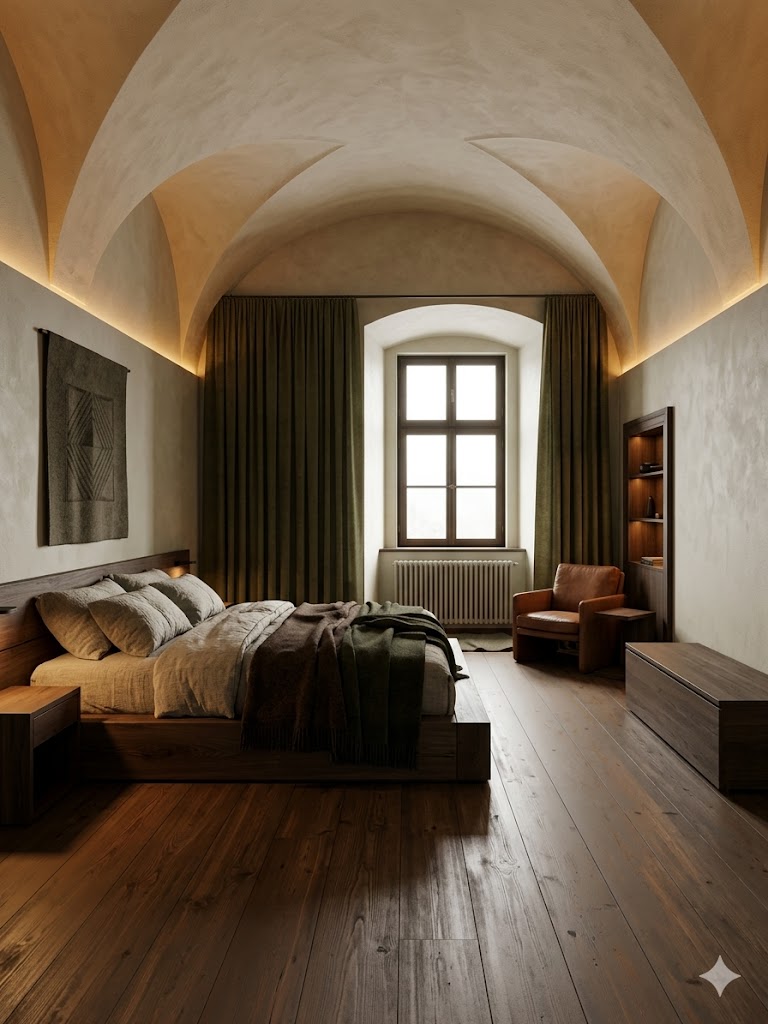
The guest chamber preserves the quiet proportions of the original infirmary cells while introducing softened contemporary warmth.

The hidden chamber

The final room within the apartment feels almost cinematic in atmosphere. Narrower and more intimate than the principal bedroom, the guest chamber embraces the psychological comfort of enclosure — a room designed for retreat, reading and winter stillness.

Warm oak surfaces, softened textiles and carefully restrained illumination allow the Gothic vaults to remain visually dominant while avoiding the darkness often associated with historic interiors.

Throughout the apartment, the project resists the temptation of aggressive modernization. Instead, the architecture itself becomes the luxury: silence, proportion, material warmth and the sensation of inhabiting a place suspended outside ordinary time.